Picture Priya on the evening she got the keys to her first apartment. The living room held a folding chair, a lamp still in its box and a stack of taped moving boxes. She sat on the floor with her laptop balanced on one of them, ordering a shower curtain and a trash can, and found out that internet installation was a week away because she had booked it late.
Priya had saved for the move and knew what her rent would be. What she did not have yet was a first apartment budget: a plan that kept the one-time cost of moving in apart from the monthly cost of living alone, with room for the things nobody remembers to list.
Move-in costs and monthly costs arrive together
A first apartment brings two kinds of spending in the same few weeks, and they behave differently.
The first kind happens once. For Priya it included:
- an application fee and a security deposit
- the first month’s rent, due when she signed the lease
- a rented van, plus lunch for the two friends who carried the mattress up three flights
- setup fees for electricity and internet
- a mattress, a desk chair and a small table
- kitchen basics: a pan, a pot, a good knife, plates and a kettle
- cleaning supplies, light bulbs, hooks, a shower rod and a plunger
The second kind keeps coming. Her new recurring costs were rent, electricity, gas, internet and renters insurance, which her lease required. Water and trash were included in the rent, something she had confirmed with the landlord before signing. The streaming service she used to watch on her parents’ account was now a plan in her own name, and she meant to join a gym once she had settled in.
One-time costs get attention because they are large and arrive in a cluster. Recurring costs start smaller and keep going, and the first bill for some of them arrives weeks after move-in. Utility bills can also change from month to month with the weather and with how much time you spend at home. For Priya, the hard part was keeping the two kinds apart, so that a heavy week of move-in purchases did not blur what the apartment would cost to run.
Priya’s notes app list
Before the move, Priya kept a running list in the notes app on her phone. It started as a packing list and became a cost list: deposit, van, mattress, internet, rent. For the first couple of weeks it was a handy memory aid, since she could add a line while standing in a hardware store aisle.
By the end of the first month, the list was off in three places. The first internet bill came in higher than the quote she had written down, because it included the setup fee and part of a month. The electric company had asked for a deposit on her new account, which she had not known to plan for. And a secondhand desk she bought from a coworker was left off the list entirely.
Even the lines that were right had no dates, so the list could not tell her which week money would leave her account. One-time purchases sat next to bills that would repeat, and the total at the bottom matched no real month. Once work got busy she opened the note less and less, and by the time she sat down to update it, she was working from memory.
A first apartment budget with fixed and flexible lines
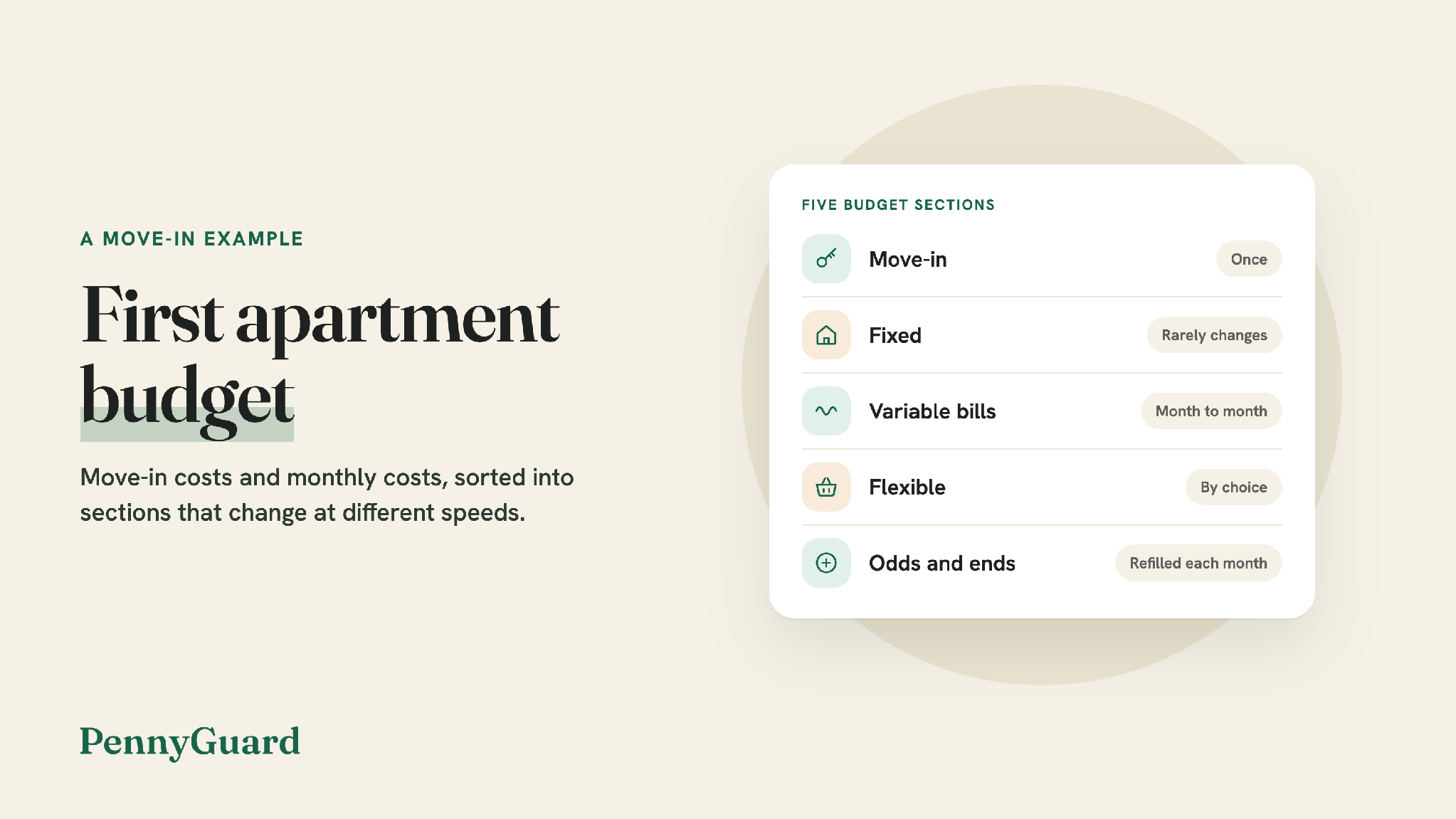
Priya started over with a short budget in five parts, each with its own job.
| Part | What went in it | How often it changes |
|---|---|---|
| Move-in | Deposits, van, mattress, desk, kitchen basics, setup fees | Once, then closed |
| Fixed | Rent, renters insurance, internet, streaming, gym | Rarely |
| Variable bills | Electricity and gas | Month to month |
| Flexible | Groceries, household supplies, eating out, fun | Each month, by choice |
| Odds and ends | Whatever she had not planned for | Refilled each month |
She wrote the due date next to each fixed and variable line and kept the odds-and-ends line generous for the first few months, while she learned what living alone costs.
The recurring side went into a subscription cancellation app and budget tracker called PennyGuard. PennyGuard for web and Android meant she could use it on her laptop at the kitchen counter and on her phone during the bus ride to work. Working from the bank account she connected, PennyGuard brought her subscriptions, recurring bills and any duplicate charges into one list, and she went through it to confirm which subscriptions were hers. Early in her second month she joined a gym two blocks from the building and added the membership herself that evening, so it sat with the other costs that came with the move.
She could see upcoming charges ahead of their renewal dates. Before a renewal, PennyGuard sent a heads-up in the app and by email, which left her time to decide, and a price change brought an alert of its own. Opening a single subscription in PennyGuard showed the date it would renew next and its earlier charges. PennyGuard also showed what she spent each month, and when a month closed she set that figure beside the fixed and flexible lines of her budget.
Over the following weeks, Priya adjusted a few lines. She moved the streaming plan to the version with ads. She called her internet provider to ask whether a slower speed would cost less, since she mostly streamed shows and answered email. Once the shower rod, hooks and plunger were bought, she trimmed the odds-and-ends line a little and opened a furniture line for a couch she planned to buy later in the year.
What you can take from this
Most of what Priya worked out applies to any first lease, from a studio to a shared house.
Keep move-in costs apart from monthly ones
Treat the move as a project with its own budget and an end date. Once the deposit is paid and the basics are bought, close that section, so the monthly plan shows only what the apartment costs to run. A deposit belongs on the move-in side, since you pay it once, at the start of the lease.
Set up utilities early
Ask the landlord which utilities are included in the rent and which need to be in your name. Then contact each provider a couple of weeks before move-in. Ask about setup fees, whether a new account needs a deposit, and the earliest installation date for internet, since that is often the one with a wait. On move-in day, take a photo of each meter so the starting reading is on record.
Ask about the deposit before you sign
Ask what the security deposit covers, how and when it is returned, and what condition the apartment should be in when you leave. Ask, too, whether there are other move-in costs, such as key fees, parking or pet fees. Walk through the apartment on move-in day, take dated photos of every room, and send the landlord a short note listing any existing damage.
Leave room for what you forgot
Most first moves turn up a few purchases nobody listed: a step stool, extension cords, a small trash can for the bathroom, a first aid kit, a basic tool kit, shelf liners. An odds-and-ends line in the first few months covers them without pulling from groceries. A friend who moved recently can usually tell you what they forgot, which is a quick way to fill in your own list.
Furnish over time
Start with what you use every day: somewhere to sleep, somewhere to sit and a way to cook and eat. Live in the space for a few weeks before choosing larger pieces, since the way you use a room often changes the plan, and measure doorways, hallways and the stairwell before buying anything large. Family and friends who are replacing their own furniture are good people to ask, and secondhand pieces can be cleaned or refinished as time allows.
Read the first bills closely
The first bill from each provider is the one to check line by line, since it may include a setup fee or a partial month. Compare it with the quote you were given and with the line in your budget, and ask the provider about anything you do not recognize.
A short checklist
A first apartment checklist for the money side of the move:
- Ask the landlord which utilities are included and which go in your name.
- Contact electricity, gas and internet providers a couple of weeks before move-in.
- Ask what the deposit covers and how it is returned, and photograph every room on move-in day.
- Write a budget with move-in, fixed, variable, flexible and odds-and-ends sections.
- Note the due date next to each recurring bill.
- Buy a bed, seating and kitchen basics first, and add furniture over the following months.
- Compare each first bill with the quote you were given.
- At the end of each month, check the odds-and-ends line and adjust it for the next one.