Introduction
Businesses today manage thousands of customer interactions across email, websites, social platforms, and support channels. Handling this volume of information manually can quickly become overwhelming. Sales teams often spend hours entering data, tracking leads, scheduling follow-ups, and coordinating with different departments. These repetitive tasks slow down productivity and increase operational costs.
This is where Zoho CRM Automation plays a crucial role. By automating routine activities, businesses can reduce manual workloads, streamline communication, and ensure that important processes run smoothly without constant supervision. Automation enables organizations to respond more quickly to customer inquiries, track opportunities more efficiently, and maintain consistent engagement throughout the sales cycle.
Modern companies are increasingly shifting toward digital systems that simplify operations and improve efficiency. Automation within CRM platforms helps businesses organize customer data, manage pipelines effectively, and improve collaboration across teams. Instead of spending valuable time on repetitive tasks, employees can focus on building relationships with customers, closing deals, and creating long-term growth strategies.
In a competitive market, speed and efficiency matter more than ever. Businesses that leverage automation technologies are better positioned to scale operations, reduce unnecessary expenses, and deliver better customer experiences. By integrating automated processes into everyday operations, companies can transform how they manage sales activities and customer relationships.
Why Business Process Automation Is Transforming Modern Organizations
Companies across industries are adopting digital technologies to improve productivity and reduce inefficiencies. Manual processes often create bottlenecks that slow down operations and lead to mistakes. When teams rely heavily on spreadsheets, emails, and manual updates, valuable time is lost on tasks that could otherwise be automated.
One of the key drivers behind this shift is business process automation, which enables organizations to streamline repetitive tasks and create structured workflows. Instead of relying on individuals to manually perform routine activities, automation tools can trigger actions automatically based on predefined rules.
For example, when a new customer inquiry arrives, automated systems can instantly assign it to the appropriate sales representative, send an acknowledgment email, and update the database with relevant information. This not only speeds up the process but also reduces the chances of missed opportunities.
Automation also improves accuracy by minimizing human errors. When data entry, notifications, and task assignments are handled automatically, businesses maintain better records and ensure that teams work with consistent information. As organizations grow and handle larger volumes of customers and transactions, automation becomes essential for maintaining operational efficiency.
How CRM Automation Tools Simplify Daily Business Operations
Modern organizations rely on technology to manage large volumes of customer data and interactions. Without the right systems in place, teams may struggle to keep track of leads, conversations, and follow-ups. This is where CRM automation tools provide significant value.
Automation tools simplify everyday operations by handling routine administrative tasks that would otherwise require manual effort. For instance, instead of entering customer details manually into spreadsheets, automated systems capture and organize data directly within the CRM platform.
Another advantage of automation tools is centralized information management. Businesses can store all customer details, communication history, and transaction data in a single location. This ensures that teams have immediate access to the information they need when interacting with customers.
Automation also enhances collaboration among departments. Sales, marketing, and customer support teams can work with the same customer data and maintain consistent communication. With structured workflows and automated task management, organizations can reduce delays and improve coordination across teams.
Streamlining Customer Interactions with CRM Workflow Automation
Managing customer relationships requires consistent communication and timely responses. Without structured systems, businesses may struggle to follow up with leads or keep track of ongoing conversations. This is where CRM workflow automation becomes highly beneficial.
Workflow automation allows organizations to create predefined sequences of actions that occur automatically when specific conditions are met. For example, when a lead submits a form on a website, the system can automatically create a new contact record, assign the lead to a sales representative, and send a follow-up email.
Automated notifications ensure that sales teams never miss important opportunities. If a prospect opens an email, schedules a meeting, or interacts with marketing content, the CRM system can trigger alerts to inform the responsible team member.
Another important benefit is consistency. Every lead or customer receives the same level of attention and engagement because workflows follow structured rules. This ensures that businesses maintain a professional approach to customer communication while reducing manual effort.
Improving Sales Performance with Sales Workflow Automation
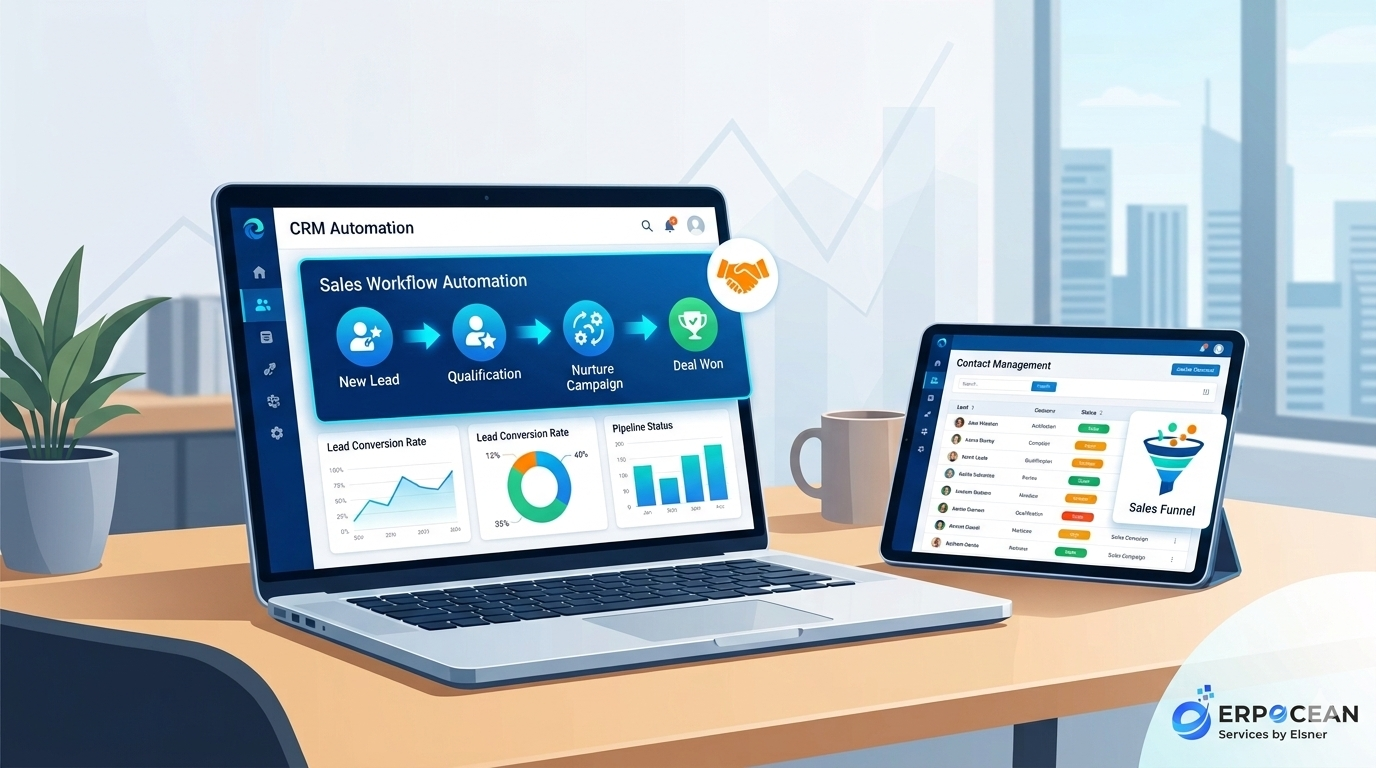
Sales teams often handle multiple leads, negotiations, and deals simultaneously. Managing these activities manually can be challenging and may lead to missed follow-ups or delayed responses. Implementing sales workflow automation helps organizations maintain a structured and efficient sales process.
Automation can assist with tasks such as assigning leads to sales representatives, scheduling follow-up reminders, and updating deal statuses. When a prospect moves to a new stage in the sales pipeline, automated systems can trigger actions such as sending proposals, scheduling meetings, or notifying managers.
This structured approach improves response times and ensures that potential customers receive timely communication. Faster responses increase the chances of converting leads into paying customers.
Another benefit is improved visibility into the sales pipeline. Managers can track deal progress, monitor team performance, and identify potential bottlenecks within the sales process. With automated workflows managing routine tasks, sales professionals can focus more on building relationships and closing deals.
Building an Efficient Lead Management System for Better Conversions
Generating leads is only the first step in the sales process. Businesses must also manage, track, and nurture those leads effectively to convert them into customers. A well-structured lead management system helps organizations organize incoming prospects and guide them through the sales journey.
Automation allows businesses to capture leads from multiple sources, including websites, social media platforms, and marketing campaigns. Once captured, the system can categorize leads based on factors such as location, industry, or interest level.
Prioritizing leads is another crucial aspect of effective lead management. Automated scoring systems can evaluate prospects based on their engagement with marketing content, previous interactions, and other behavioral indicators. This allows sales teams to focus on the most promising opportunities.
Tracking customer journeys also becomes easier with a structured lead management approach. Businesses can analyze how leads interact with their brand, identify areas for improvement, and refine their sales strategies accordingly.
Ensuring Successful CRM Adoption with Proper Zoho CRM Implementation
Implementing a CRM system requires careful planning and configuration to ensure that it aligns with business objectives. A well-structured zoho crm implementation process ensures that automation features, workflows, and data structures are set up correctly from the start.
During implementation, businesses must define their sales processes, organize customer data, and configure automation rules that support their operations. Proper planning ensures that the CRM system becomes an integral part of everyday business activities rather than an underutilized tool.
A successful implementation also involves training teams to use the platform effectively. Employees need to understand how to access customer information, update records, and leverage automation features within their daily workflows. When teams are comfortable using the system, businesses can maximize the benefits of CRM technology.
Enhancing Business Connectivity Through Zoho CRM Integration Services
Modern organizations rely on multiple software solutions to manage marketing, finance, customer support, and other operations. Integrating these systems ensures that information flows seamlessly between platforms. This is where zoho crm integration services play an important role.
Integration allows businesses to connect their CRM platform with marketing automation tools, accounting software, and communication platforms. This eliminates data silos and ensures that information is synchronized across different systems.
For example, when a new customer places an order, the CRM system can automatically share that information with accounting software for invoicing and with support teams for future service requests. This interconnected ecosystem improves efficiency and reduces the need for manual data transfers.
How Zoho CRM Consulting Helps Businesses Design Effective Automation Strategies
Implementing automation without a clear strategy can lead to inefficient workflows and missed opportunities. Many organizations benefit from expert zoho crm consulting to identify the best ways to structure their CRM environment.
Consultants analyze existing business processes and recommend improvements that align with organizational goals. They help businesses determine which activities should be automated and how workflows should be structured.
This strategic approach ensures that automation supports real business needs rather than simply adding complexity. With proper guidance, companies can build CRM systems that improve efficiency, enhance customer engagement, and support long-term growth.
Scaling Business Operations with Professional Zoho CRM Services
As organizations grow, their customer base expands, and operational requirements become more complex. Businesses often rely on specialized zoho crm services to optimize their CRM systems and adapt them to evolving needs.
Professional services may include workflow optimization, feature customization, performance monitoring, and system enhancements. These improvements ensure that the CRM platform continues to support business operations effectively as the company scales.
Ongoing optimization helps organizations maintain efficient workflows and adapt to changing market conditions. With the right support, businesses can continuously improve their CRM capabilities and maintain a competitive advantage.
Maintaining System Stability with Reliable Zoho CRM Support
Technology platforms require ongoing maintenance and troubleshooting to ensure smooth operations. Reliable zoho crm support helps businesses address technical challenges, maintain system performance, and ensure uninterrupted access to CRM tools.
Support services may include resolving software issues, updating system configurations, and assisting teams with technical questions. Having access to expert support ensures that businesses can quickly resolve problems without disrupting their daily operations.
Continuous support also helps organizations keep their CRM systems updated with the latest features and improvements, ensuring that they continue to benefit from evolving technology capabilities.
Why Professional CRM Implementation Services Improve Automation Outcomes
Deploying a CRM platform successfully requires careful planning and expertise. Professional crm implementation services ensure that systems are configured correctly, workflows are optimized, and data structures support business objectives.
Implementation specialists work closely with organizations to understand their sales processes, customer interactions, and operational requirements. This allows them to design CRM systems that align with real business needs.
Proper implementation also helps businesses avoid common mistakes such as poorly structured workflows, incomplete data migration, or inefficient automation setups. With expert guidance, organizations can ensure that their CRM platform delivers maximum value.
How Businesses Can Automate Business Workflows for Greater Productivity
Automation allows companies to streamline operations and reduce manual workloads across departments. When businesses automate business workflows, repetitive tasks such as data entry, notifications, and follow-ups are handled automatically by the system.
This not only saves time but also ensures consistency in operations. Employees can focus on higher-value activities such as customer engagement, strategic planning, and relationship building.
Automated workflows also improve accountability by clearly defining responsibilities and triggering tasks when certain conditions are met. As a result, teams can collaborate more effectively and maintain organized processes.
The Growing Importance of CRM Automation Software for Business Growth
Digital transformation has become a key priority for organizations aiming to remain competitive. Businesses require flexible tools that allow them to manage customer relationships, analyze data, and streamline operations. This is where crm automation software plays a vital role.
CRM platforms help organizations centralize customer information, track interactions, and monitor sales performance. Automation capabilities further enhance these systems by eliminating manual processes and enabling faster decision-making.
As companies expand their operations, automation technologies allow them to scale efficiently without increasing administrative workloads. By leveraging CRM platforms with strong automation features, organizations can maintain productivity while delivering better customer experiences.
Conclusion
Automation has become an essential part of modern business strategy. By reducing repetitive tasks, organizing customer data, and streamlining communication, businesses can improve efficiency while lowering operational costs. CRM platforms play a significant role in enabling these improvements by providing structured tools that support sales management, customer engagement, and workflow optimization.
However, as organizations grow and their operational requirements become more complex, they often realize that standard CRM configurations may not fully address their unique workflows. Many companies explore advanced customization options to create CRM environments that align more closely with their internal processes and long-term goals.
Businesses looking to enhance their CRM capabilities often turn to ERPOcean for guidance on Custom Zoho CRM Development and advanced workflow customization strategies. Tailored solutions from ERPOcean allow organizations to design automation processes that reflect their sales models, customer engagement strategies, and internal workflows, ultimately helping them achieve greater efficiency and scalability.
FAQ
1. How can Zoho CRM Automation help reduce manual tasks in my business?
Many small businesses spend too much time on repetitive tasks like data entry, follow-ups, and lead tracking. Zoho CRM Automation can streamline these processes by automating workflows, scheduling follow-ups, and centralizing customer data, saving time and reducing errors.
2. What is the best way to implement a lead management system using Zoho CRM?
Tracking and prioritizing leads manually can lead to missed opportunities. A structured lead management system within Zoho CRM captures leads from multiple channels, scores and prioritizes them, and assigns them to the right sales representatives, ensuring faster responses and higher conversions.
3. How does Zoho CRM support improve overall business efficiency?
Technical challenges or a lack of guidance can hinder CRM usage. Zoho CRM support helps businesses troubleshoot issues, optimize automation workflows, and maintain smooth operations, enabling teams to maximize productivity and improve customer engagement.
4. Can ERPOcean help my business customize Zoho CRM for automation?
Standard CRM setups often don’t fit unique business workflows. ERPOcean offers custom Zoho CRM development and advanced workflow customization strategies, ensuring your CRM aligns with your sales processes and automates critical tasks efficiently.
5. What are the key benefits of using CRM automation tools for small businesses?
Small businesses often lack the resources to manage sales and customer data manually. CRM automation tools like Zoho CRM automate repetitive workflows, track leads efficiently, and manage customer relationships, reducing operational costs and improving response times.