I never meant to become a boat person. That identity always felt like it belonged to someone else, someone with a weathered tan, a rope bracelet, and a cooler full of confidence. I was the guy who flew everywhere, who measured adventure in air miles, who thought the open water was something you looked at from a beach bar.
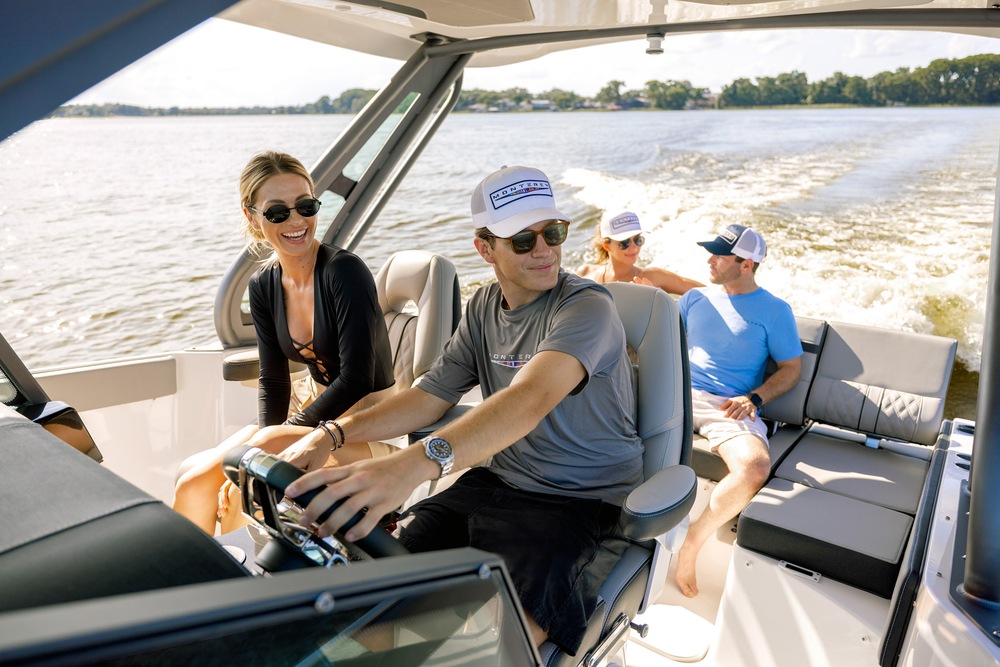
That changed the summer I borrowed a friend’s pontoon boat on Lake Cumberland, Kentucky. We had no itinerary, no hotel reservations, and enough groceries for four days on the water. By day two, I understood what I’d been missing. By day four, I was already looking up how to get my boating license.
America’s waterways are one of the great underrated travel networks in the world. Thousands of miles of rivers, lakes, reservoirs, bays, and coastal passages, and most of them quietly waiting while everyone rushes to the airports. If you’re looking for a different kind of adventure, slower and wider and endlessly more surprising, it’s time to think about going by boat.
America’s Waterways: A Travel Network You’re Ignoring
Most people think of boating as a weekend hobby. Launch on Saturday, back in the slip by Sunday. But America’s inland waterways tell a much bigger story.
The Great Loop, a roughly 6,000-mile continuous waterway route circling the eastern United States, connects the Atlantic Seaboard, the Gulf of Mexico, the Mississippi and Tennessee-Tombigbee river systems, and the Great Lakes. Thousands of boaters complete it every year. Many say it’s the best thing they’ve ever done.
Beyond the Loop, there are quieter adventures waiting on nearly every corner of the map. The Chain of Lakes in Minnesota. The Sacramento River Delta in California. The Intracoastal Waterway winding down the Florida coast. Lake Powell straddling Utah and Arizona. Each offers a completely different experience of landscape, wildlife, pace, and people, and each is best understood from the water.
The rhythm of boat travel is unlike anything else. You move slowly enough to actually notice things: the way herons stand motionless in the shallows at dawn, the surprise of a waterfall you’d never have found by road, the way small river towns look from the water. Their backs turned to passing traffic, their fronts still facing the current like they did a hundred years ago.
What Kind of Boater Are You?
The beauty of water-based travel is that it scales. You don’t need a 40-foot cruiser and a six-figure budget to experience it properly. Here’s a rough breakdown of how people usually get started:
- Day trippers and weekend warriors: Renting a pontoon boat, a fishing vessel, or a kayak for a day or two on a local lake. Low commitment, high reward. Perfect for testing the waters, literally.
- Seasonal boaters: Owning or sharing a boat that stays at a marina through the warmer months. This is the most common entry point into boat ownership, and it comes with its own community.
- Live-aboards and long-haulers: People who travel extended routes over weeks or months, treating their boat as a moving home base. The Great Loop crowd falls into this category.
- Fishing travelers: Moving between fishing destinations across lakes and rivers, prioritizing access to water over comfort. Often overlaps with all three categories above.
Most people start in the first category and quietly slide into the second. A few get bitten badly enough to try the third. All of them tend to say the same thing: they wish they’d started sooner.
The Practical Side Nobody Warns You About
Here’s the part of the boating life that doesn’t make the Instagram feed: logistics. Specifically, where does the boat go when you’re not using it?
This is the question that sneaks up on you. After that first great trip, you come back sunburned, slightly dehydrated, already planning the next one. Then you’re staring at a trailer in your driveway, wondering how long it can realistically stay there.
For me, that’s when boating stopped feeling like a weekend experiment and started feeling like something that needed a system.
I looked into marina slips first, but availability was inconsistent and the costs added up quickly. Leaving the boat outside full-time didn’t feel like a great option either, not with the sun, rain, and everything else slowly wearing it down.
Most people I spoke to eventually landed on using secure boat storage facilities, simply because it takes that constant low-level worry out of the equation. You know the boat is protected, you can get to it when you need to, and you’re not trying to make your living space double as storage.
Once that piece is sorted, everything else about boating becomes easier. You’re not dealing with space or logistics anymore. You’re just deciding where to go next.
The Best Boating Destinations in the United States
If you’re ready to plan a water-based adventure, here are some of the destinations that consistently deliver for boaters of every experience level:
The Florida Keys
The Overseas Highway gets the attention, but the Keys are best seen by water. Shallow turquoise bays, mangrove islands, world-class snorkeling, and an unhurried marina culture that rewards people who aren’t in a hurry. Rent a center-console fishing boat for a day or bring your own on a trailer. Either way, you’ll find water unlike anywhere else in the continental US.
Lake Powell, Utah/Arizona
One of the most otherworldly boating destinations on earth. Red sandstone canyon walls rising hundreds of feet from still blue water. Slot canyons that you can only reach by dinghy. Houseboats rented by the week, anchored in private coves without another soul in sight. Powell rewards slow exploration, there’s simply too much to take in any other way.
Lake Michigan’s Northern Shore
Often overlooked in favor of coastal destinations, northern Lake Michigan offers genuinely spectacular boating. The Sleeping Bear Dunes National Lakeshore, the Leelanau Peninsula, Traverse City’s bay, and the Manitou Islands are all accessible by water. Summer temperatures are cool, the water is surprisingly clear, and the towns along the shore have a low-key charm that keeps people coming back.
The Columbia River Gorge, Oregon/Washington
The Columbia is one of America’s great rivers, and its gorge section, where the river cuts through the Cascades between Oregon and Washington, is spectacular from the water. Volcanic peaks, waterfalls, dramatic basalt cliffs, and the constant backdrop of wind that makes this region famous among kiteboarders and windsurfers. Boating here requires some experience with current and wind, but the reward is worth it.
The Chesapeake Bay
The largest estuary in the United States and one of the most culturally rich boating destinations anywhere. Annapolis, Oxford, St. Michaels, and dozens of smaller waterfront towns are all connected by the bay’s 11,684 square miles of navigable water. Crab shacks accessible only by boat. Osprey nests on every channel marker. Thunderstorms that build fast and blow through clean. The Chesapeake rewards people who slow down and pay attention.
Practical Tips for Getting Started
If I could go back to that first trip on Lake Cumberland, I wouldn’t change much. But there are a few things I’d do differently, mostly the kind you only learn after a couple of slightly stressful moments on the water.
For one, I would’ve spent a bit of time understanding how things actually work out there. Nothing complicated, just the basics. Who has the right of way, how to approach a dock without overcorrecting, what to watch for when the water looks deceptively calm. You can get by without it, but everything feels easier once you’re not guessing.
I also would’ve started smaller. The boat we had was manageable, but I remember thinking at one point that anything bigger would’ve turned the whole experience into something else entirely. There’s a sweet spot where it still feels like freedom and not responsibility.
The gear part didn’t seem important until it suddenly did. A proper life jacket that actually fits, a radio that works when your phone doesn’t, a basic first-aid kit you hope you never open. None of it feels urgent until the moment it is.
And then there’s the part nobody really talks about when you’re just getting into it. Not the time on the water, but everything around it. Where the boat goes, how you access it, how much effort it takes to get out for a quick trip. That was the first time I realized boating isn’t just about the days you’re out there. It’s about how easy you make it to come back.
The only shortcut I found was talking to people who had already figured it out. The ones who spend most weekends on the water usually have a system, and they’re surprisingly open about what works and what doesn’t.
The Mindset Shift
There’s something that happens after a few days on the water that’s hard to describe to people who haven’t experienced it. The pace changes. You stop checking your phone every ten minutes, partly because the signal is bad, mostly because there’s too much to look at. You start noticing weather in a different way, paying attention to wind direction and cloud formations because they actually matter.
Boat travel requires a kind of present-tense attention that most modern life actively discourages. You have to be where you are. And where you are turns out to be pretty remarkable.
That summer on Lake Cumberland, I covered maybe forty miles in four days. I could have driven that in forty-five minutes. Instead, I watched a family of otters play on a rocky bank at dusk. I swam in water so still it looked like poured glass. I ate dinner at a floating restaurant accessible only by dock and talked to a couple who had been living on their boat for three years. They seemed like the least stressed people I had ever met.
I went home and bought a boat within the month.